
Technology / Product Development

Design. Simulate. Interact. Optimize.

Theta Simulation Framework (TSF) is Theta’s proprietary platform for simulating its own firmware with motor, inverter, and supply models. It brings hardware, firmware, and motor-control decisions into a parallel development process, before final prototypes are available.

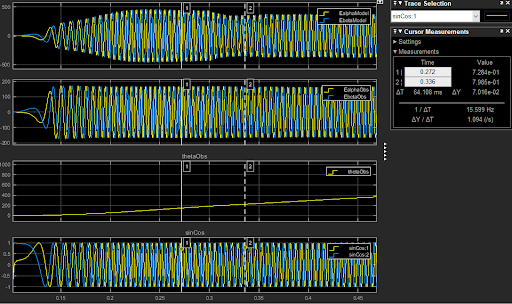
Signal plots from Theta’s supplied engineering presentation
Engineering image from Theta’s supplied presentation · Original signal capture; operating conditions are not specified in this figure.
Simulation / Engineering in view

From model signals
to hardware decisions.

Explore the original figures and photographs from Theta’s supplied technical materials. Select a view and enlarge it to inspect the detail.

Signals from the engineering environmentOriginal signal capture from the supplied September 2025 WEG presentation. Motor and test conditions are not specified in this figure.
A visual engineering perspective

Signals from the engineering environment

Compare model signals and observer-related variables over time. The actual engineering capture adds a view of the development work behind the simulation story.

  • Multiple signals on a shared time base
  • Model and observer behavior visible during development
  • Use the trace to guide engineering questions, not as a general performance rating
Engineering approach

From architecture to application.

01 / ENGINEERING APPROACH

Simulate the firmware that will control the product

TSF simulates Theta’s own firmware code. Engineers can change inverter models, power inputs, motor parameters, and motor types to evaluate configurations while refining the product requirements.

02 / ENGINEERING APPROACH

Develop hardware, firmware, and control in parallel

Begin firmware and motor-control development before the final hardware prototype is ready. Coordinate the disciplines as requirements evolve and review alternatives with the OEM engineering team.

Read more engineering details
03 / ENGINEERING APPROACH

See the system’s behavior and limits

Explore critical operating conditions, protection behavior, and efficiency in the model. Inspect currents, voltages, torque, physical quantities, and application-specific variables.

04 / ENGINEERING APPROACH

Troubleshoot and evolve existing products

Use simulation to investigate system or field issues, examine product variants, and evaluate new features or algorithms before committing to a physical change.

05 / ENGINEERING APPROACH

Connect simulated evidence to physical validation

Model fidelity, parameters, and operating conditions determine what simulation can establish. Confirm the selected design with relevant hardware measurements and product verification.

06 / ENGINEERING APPROACH

Published development-time perspective

Theta’s published TSF article reports product launches up to three times faster than traditional development processes. This is a stated upper-end outcome, not a guaranteed schedule reduction for every project; the baseline and project scope matter.

Interactive development

Begin with the questions that matter.

Select an application to explore examples of topics for an initial engineering review.

Learn more in Theta’s published TSF overview.

EXPLORE DEVELOPMENT PRIORITIES 01 / DISCOVERY

Actuator behavior & changing loads

An engineering discussion can begin with the motion profile and the mechanical load the actuator needs to handle.

  • Motor and load characteristics
  • Torque and speed requirements
  • Control, inverter, and packaging options
Illustrative discussion guide. This is not a live simulation.

What does your next product need to do?

Bring your requirements. Let’s explore the engineering together.

Discuss your application