The motor-drive contribution
Evaluate torque and speed behavior, changing loads, electronics constraints, and integration with the robotic platform. The DTFC papers support discussion of startup, estimated torque and flux, and operating range.
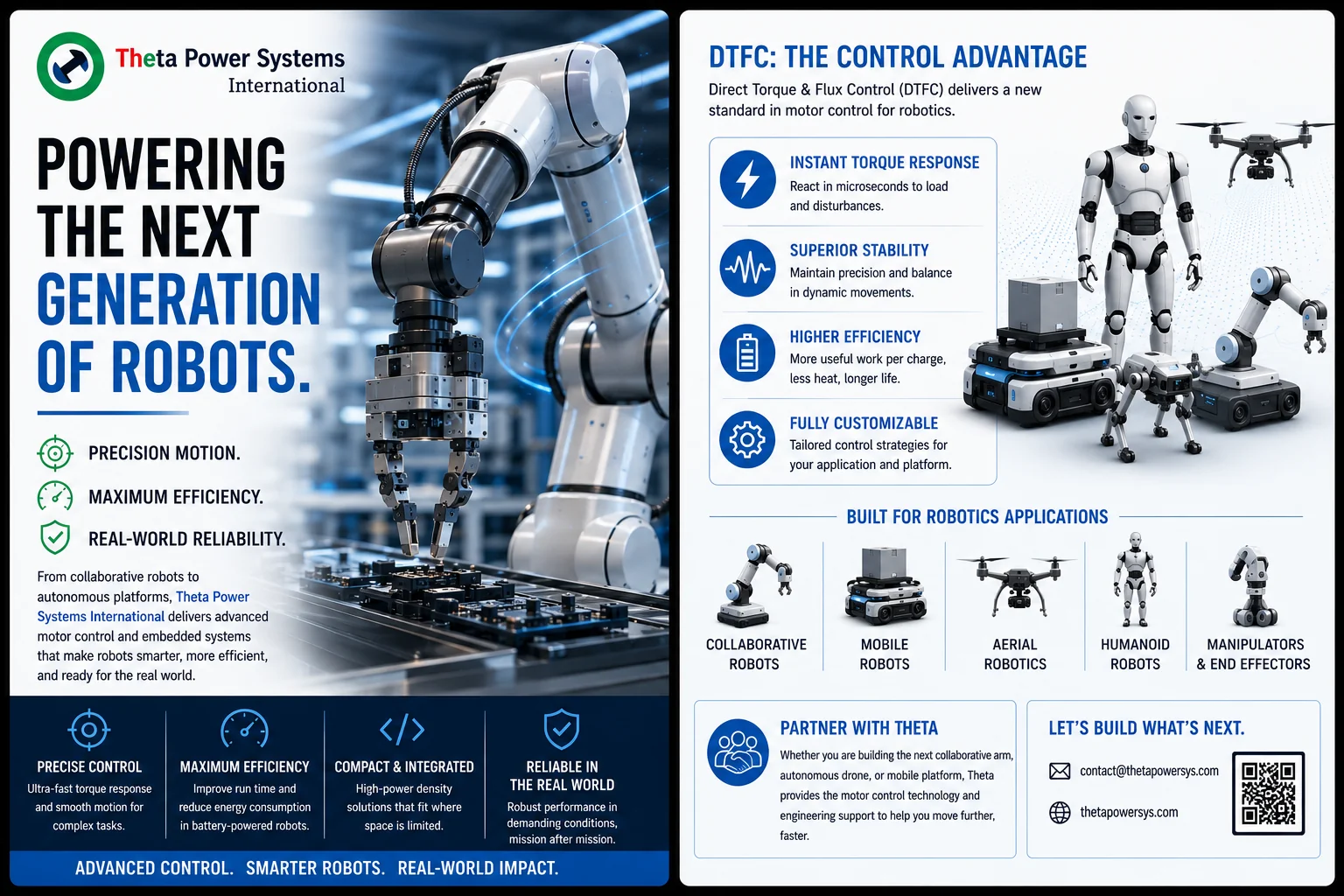
Robotic platforms combine motor drives with higher-level motion and position control. Theta brings motor control, power electronics, and embedded development to the actuator and subsystem requirements of each program.

Evaluate torque and speed behavior, changing loads, electronics constraints, and integration with the robotic platform. The DTFC papers support discussion of startup, estimated torque and flux, and operating range.
The current DTFC white paper describes sensorless speed control. Joint positioning, trajectory tracking, and safety functions require a separately defined architecture and verification plan. The motor-control technology is one part of that system.

Use motor and inverter models, guided calibration, and prototype measurements to evaluate the drive under the intended loads. Establish performance requirements and acceptance criteria for the complete subsystem.
Bring your requirements. Let’s explore the engineering together.