01 / ENGINEERING APPROACH
Characterize the application
Define the operating envelope, mechanical behavior, and the conditions that matter to the final equipment.

Pump, fan, and compressor applications connect motor behavior with the physical system around it. Theta evaluates control and electronics against those application needs.
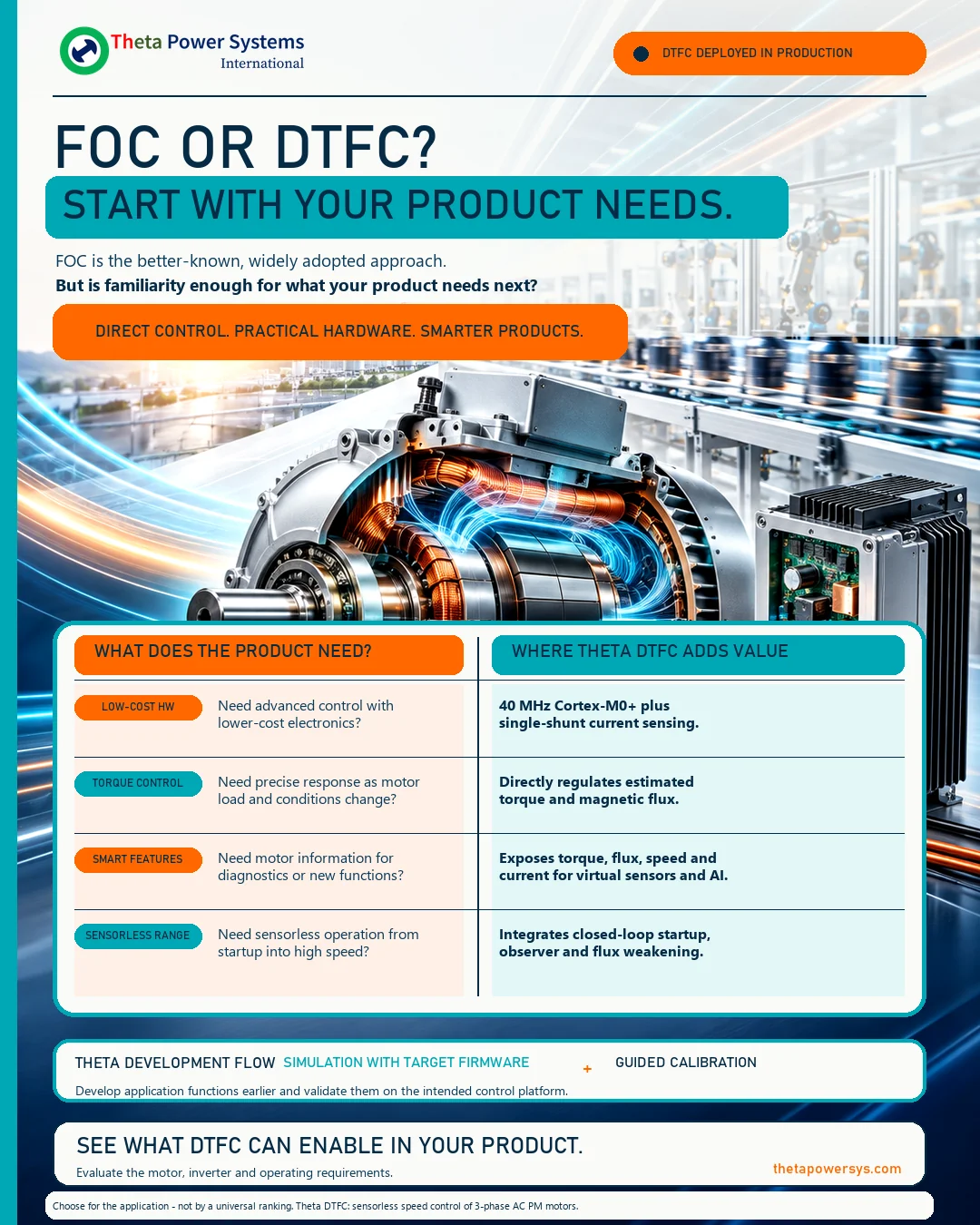
Bring the physical motor and load into the same discussion as the control, electronics, and software.
Define the operating envelope, mechanical behavior, and the conditions that matter to the final equipment.
Explore motor-control choices alongside sensing, application logic, electronics, and protection requirements.
Noise, vibration, efficiency, and cost outcomes depend on the application and test conditions. Agree on measurable criteria before making performance claims.
The AI examples explore estimated torque and current as inputs for identifying load changes, friction, imbalance, and possible faults in pumps and fans. These are application concepts that require representative data and validation before deployment.
Bring your requirements. Let’s explore the engineering together.