01 / ENGINEERING APPROACH
Begin with the product
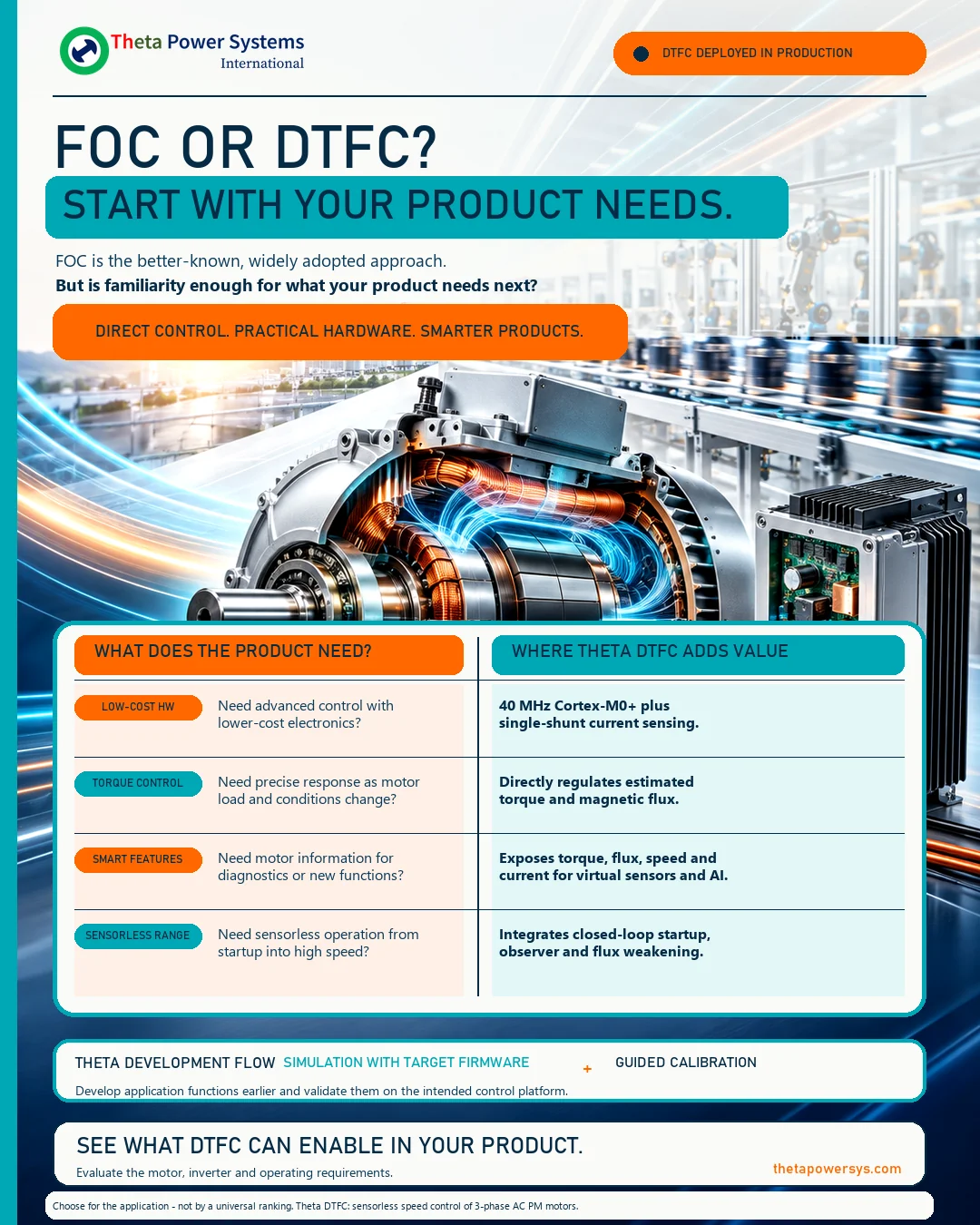
Define the operating envelope, mechanical load, cost targets, and behaviors the product needs. Evaluate the control approach against those requirements.

Motor control is a system decision. Theta works with OEM engineering teams to connect motor behavior, inverter design, embedded firmware, and product requirements.
Bring the physical motor and load into the same discussion as the control, electronics, and software.
Define the operating envelope, mechanical load, cost targets, and behaviors the product needs. Evaluate the control approach against those requirements.
Bring motor control, power electronics, protection functions, and application firmware into the same engineering process.
Use simulation to explore motor, inverter, and control configurations, then verify the selected design through prototype measurements.
The DTFC papers describe guided calibration and access to estimated torque, flux, speed, and currents. These signals can connect the motor-control subsystem with load analysis and higher-level application functions.
Bring your requirements. Let’s explore the engineering together.